How does it work?
Our solution
The benefits of the solution molluSCAN-eye®
molluSCAN-eye® is a real technological breakthrough.
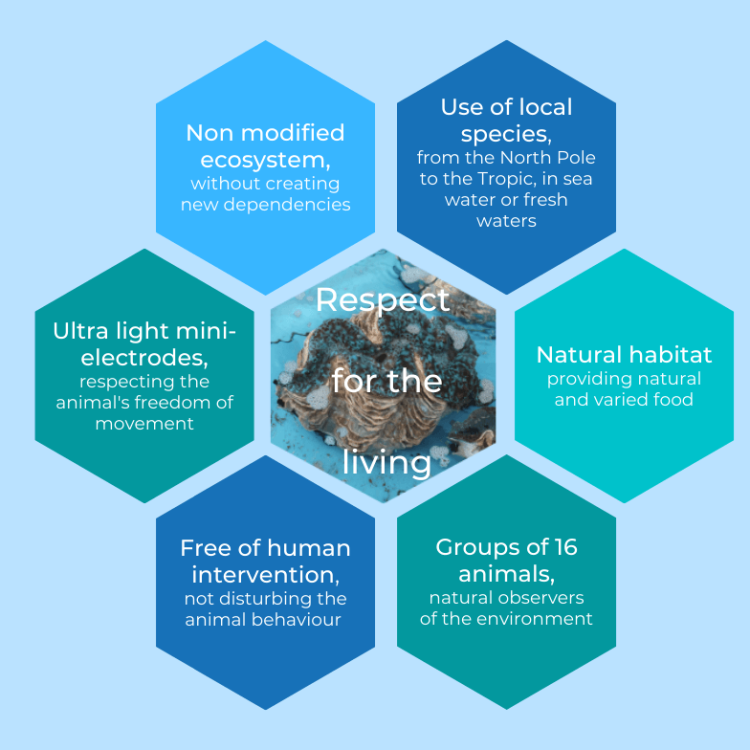
Our solution Respect for living things
A solution based on valvometry & the Internet of Things (IoT)
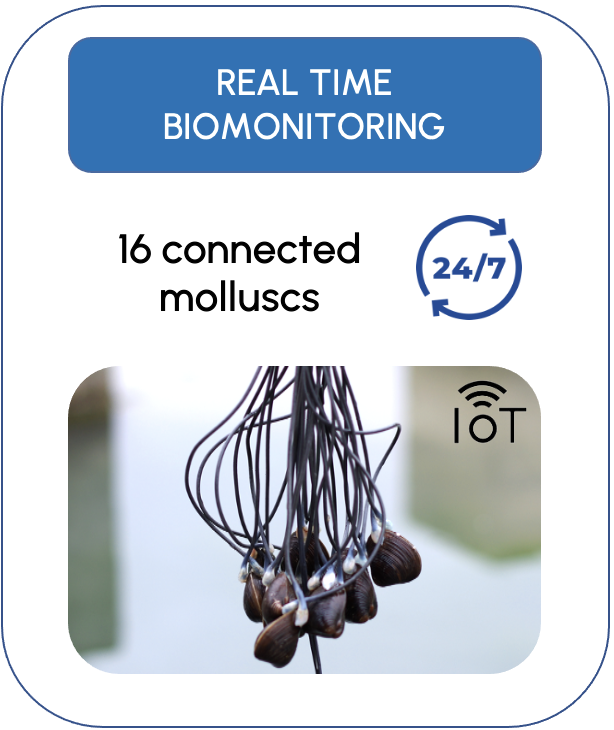
Our molluSCAN-eye® technology is based on the ability of bivalve mollusks (oysters, mussels, scallops, etc.) to indicate water quality as soon as it disturbs them.
Behavioral analysis is the most sensitive tool available on the market. Applied in situ, it is 10 to 100 times more sensitive than chemistry in natural waters — unbiased and general-purpose, with no preconceived idea about the nature of the pollutant, its degradation products or the unknown cocktail of molecules produced.
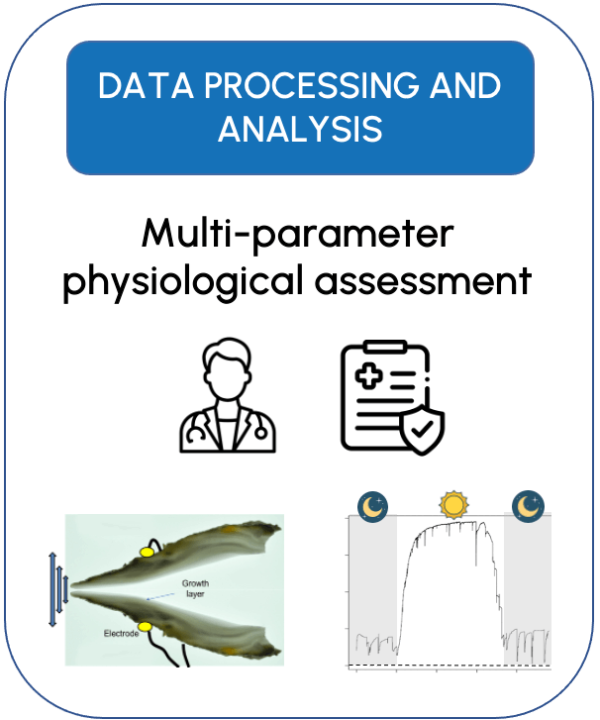
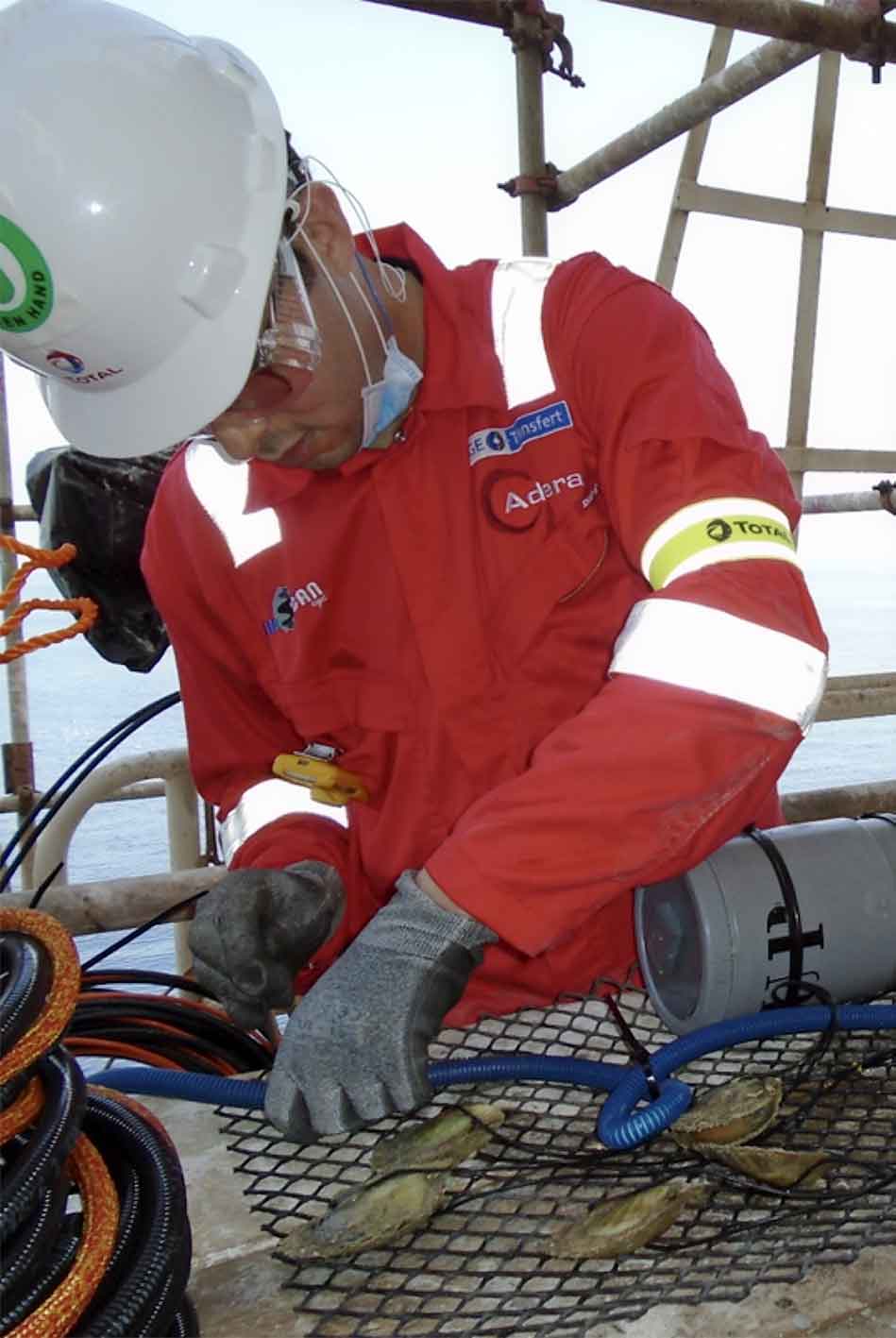
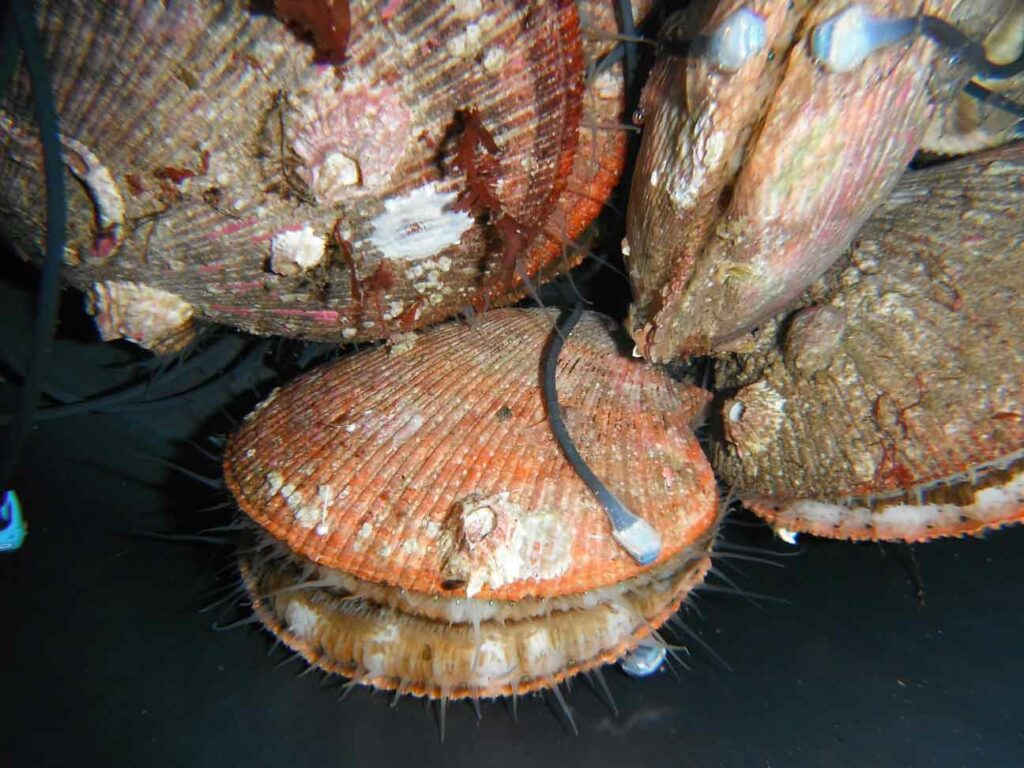
Thanks to tiny electromagnets glued onto the valves, and to unique electronics and software (embedded Linux), our systems monitor the valves’ opening and closing cycles, their growth, spawning, and so on. This technology — High-Frequency Non-Invasive valvometry (HFNI) — makes it possible to track more than 10 different physiological and behavioral parameters each day, and thus to produce daily health checks.
All of this 24/7 and remotely from any computer thanks to the Internet of Things: that is, the exchange of information and data from the physical world (here, the animals and an embedded system) to the Internet network.
IN THE FIELD
molluSCAN SERVER – BORDEAUX
CLIENT
Oysters, clams, mussels, scallops A daily online health check
As we know, bivalves ventilate throughout the day, filter suspended plankton particles to feed, and constantly “taste” the water. For example, any anomaly the animal deems dangerous translates into a change in behavior, such as closing its valves for a longer or shorter time to protect itself. Death — valves wide open and motionless — is the ultimate response.
We are not satisfied with a hypothetical rapid closure that would only signal very high pollution. We measure and quantify in real time around ten physiological parameters that allow an analysis as precise as a hospital health check:
- The valve gape amplitude, an immediate indicator of the presence of pollutants and diseases
- Daily growth
- Spawning
- Biological rhythms
- Mortality
- Opening duration
- Maximum opening
- Agitation/day
- Agitation during open periods/day
- Contraction speed
How it works Technical details
1. Valve-opening measurement Valvometry
A micro-electromagnet is glued onto each of the animal’s valves. The measurement of the valve gap — a wholly original technique (10 to 100 times more precise than conventional methods) — is taken between two coils weighing less than 1 gram. It is insensitive to variations in water turbidity and salinity, as well as to fouling. It has been proven for maintenance-free deployment of more than 3.5 years at sea.
2. Amplification, digitization, multiplexing Acquisition
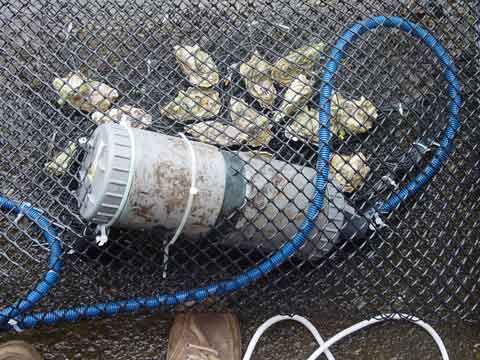
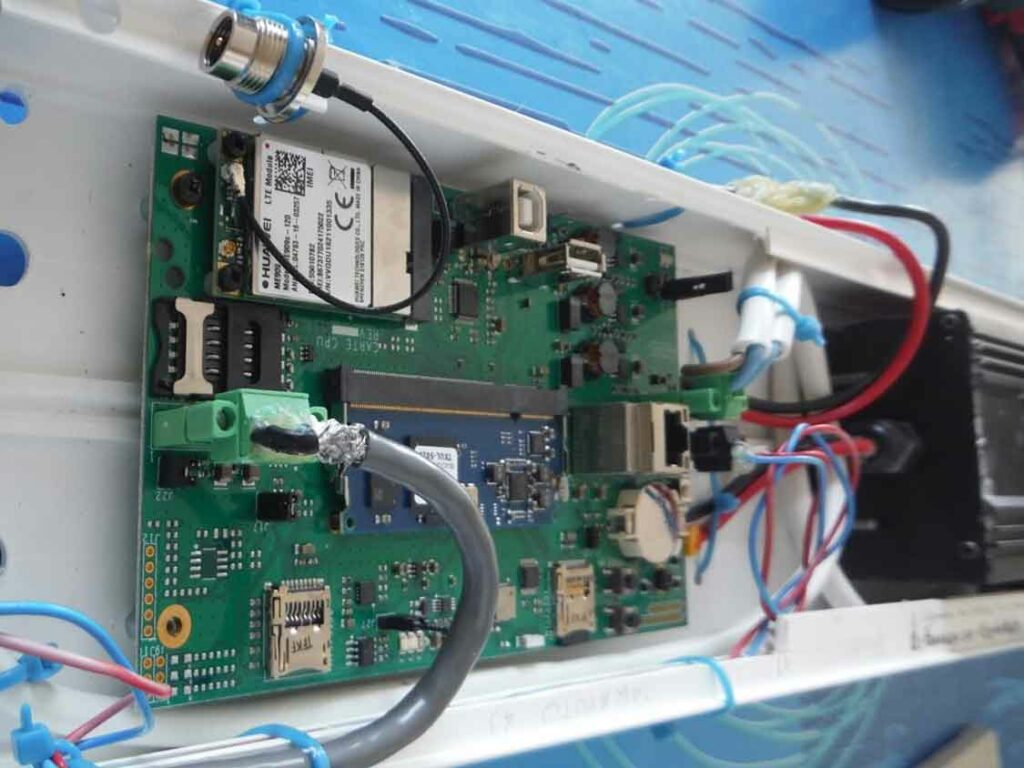
Measurement and signal management are handled under embedded Linux, on two boards. Board 1 is submerged in a watertight enclosure, as close as possible to the animals.
3. FROM THE FIELD TO THE LAB Data transfer
Board 1 is connected to a Board 2 at the surface via an umbilical cable (250 m max.). It manages connectivity with the server at the Arcachon Marine Station. The Board 1 – umbilical – Board 2 assembly is a genuine micro-computer whose design we own. It runs on embedded Linux. The encoded data are transmitted daily via the mobile phone network or directly through an Ethernet port.
4. Receiving the recordings & Raw data storage
The files are automatically decoded, processed and saved upon arrival, on a workstation at the Arcachon Marine Station. Two backup sites, located in two places different from the main server’s, ensure security through redundancy. For each animal, the data record is a series of points, each with two values:
- the distance between the two electrodes (i.e. the value of the valve gap at the level of the electrodes, expressed in micrometers)
- a time (expressed in hours, minutes, seconds) which is the time at which the measurement is taken.
5. ANALYSIS & PROCESSING BY Artificial Intelligence
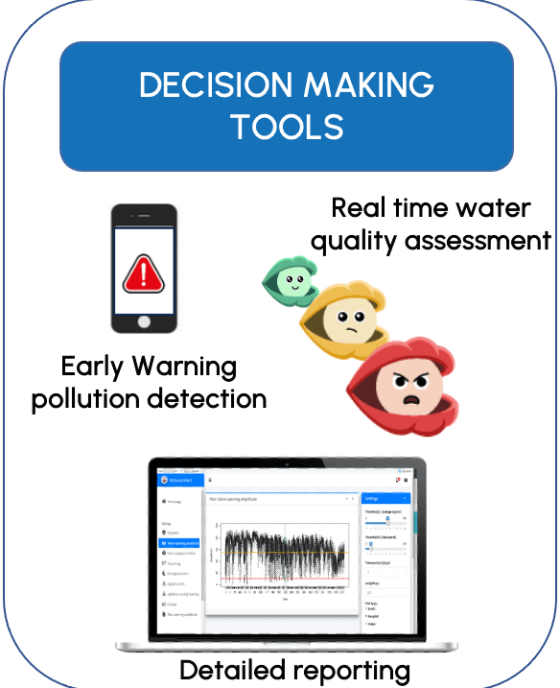
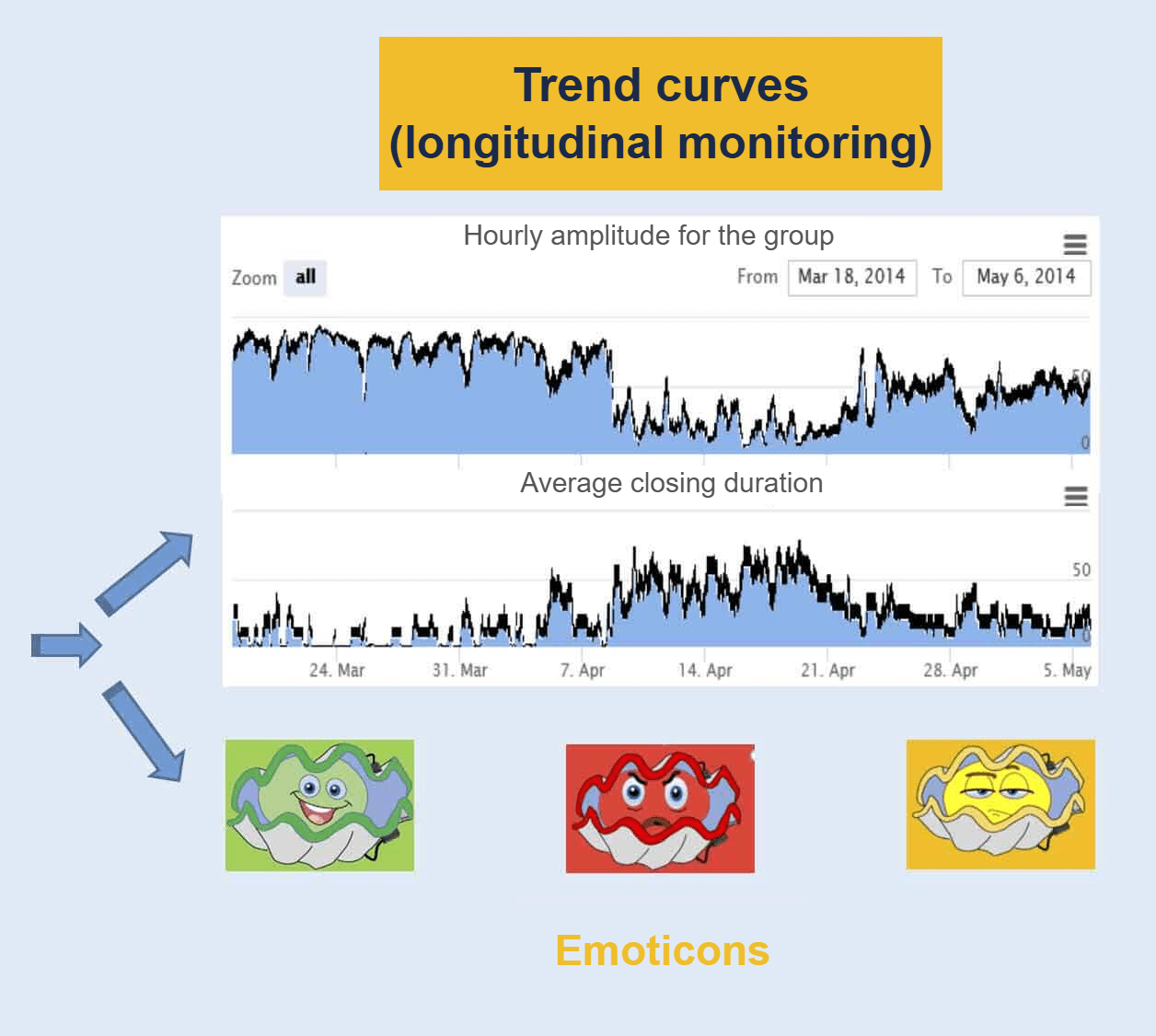
The results, updated daily, are available via a login and password. Our team monitors them and is always on hand to analyze and discuss them. The approach is to make this information automatically readable online every morning:
- by modeling behavior and around ten physiological parameters on easy-to-read graphs
- by publishing, in the form of green, orange or red summary indices, integrative information on the health status of the group of animals monitored, and therefore of their environment
- We thus move from monitoring sentinel animals, indicators of local biodiversity, to monitoring the quality of the environment — seen no longer through partial chemical analyses but through integrative biomonitoring.